AI-Powered Trademark Applications: What the USPTO Allows
The USPTO embraces AI for trademark processing. Learn how AI tools draft filing-ready applications, what rules apply, and how humans remain central to the process.
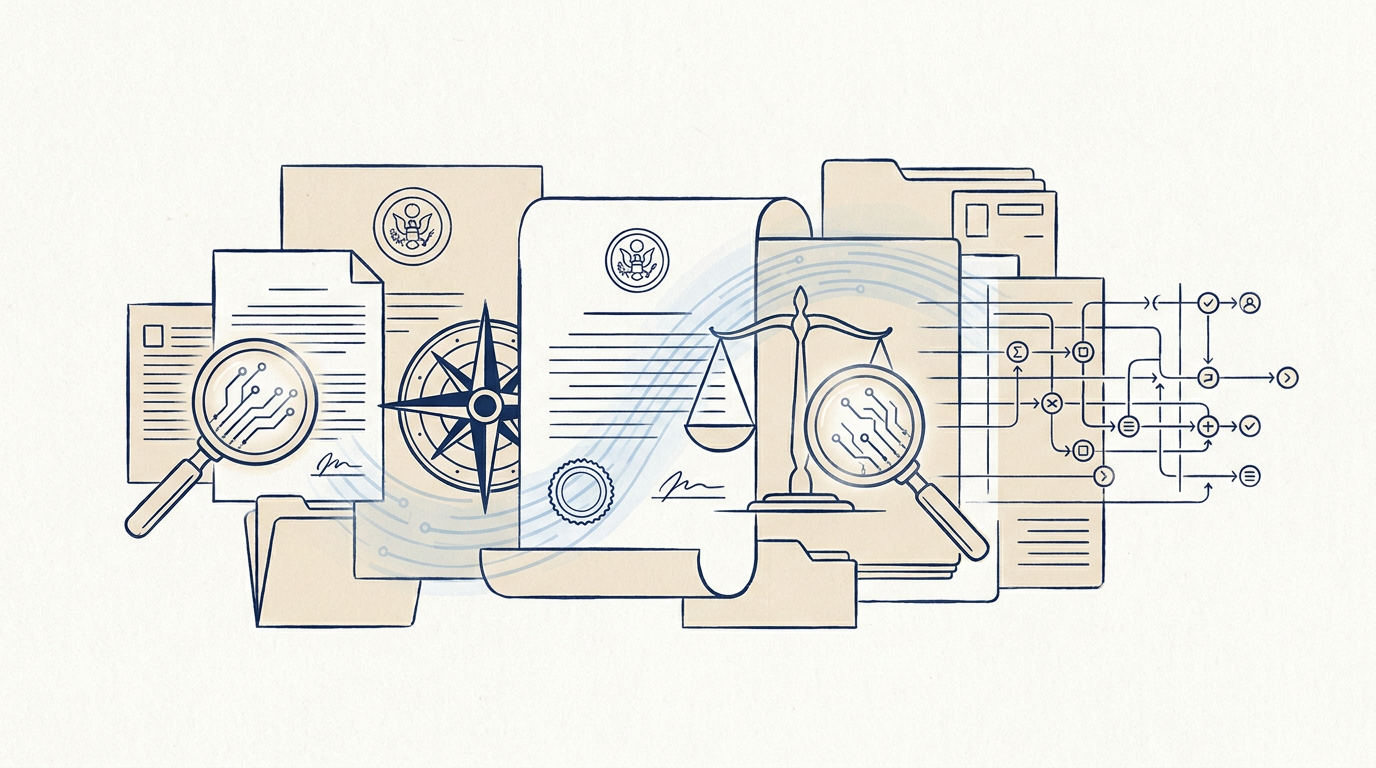
The U.S. Patent and Trademark Office (USPTO) is clear: AI tools are part of the future for trademark applications. On April 11, 2024, the USPTO issued formal “Guidance on Use of AI in Practice Before the USPTO.” This guidance covers both patents and trademarks, clarifying there is no prohibition on using AI tools to draft filings.
This means an AI agent can help build your trademark application. But it’s not a free-for-all. The guidance emphasizes that existing rules still apply, and human responsibility remains central to the process.
The USPTO's Stance on AI in Filings
The USPTO's April 2024 guidance highlights several key points for anyone using AI to prepare trademark applications:
- Human Responsibility: Filings must be signed by a real person, not an AI system. The human signer is responsible for the accuracy and truthfulness of the content, even if AI assisted in drafting it.
- No Disclosure Required: There is no general obligation to disclose that AI was used to draft a filing, unless the USPTO specifically asks.
- No AI Accounts: An AI system cannot hold a USPTO.gov account or be treated as an authorized “user” of USPTO IT systems for filing or accessing information.
- Careful Review: Anyone using AI must carefully review any AI-generated text to ensure it is accurate, supported, and compliant with USPTO rules. This means no